Sometimes I am amazed by the silly things the Federal government chooses to spend money on. I say silly, but even though some of these actions are ridiculous they still harm real people at the expense of the taxpayers.
Today I came across two clandestine government programs to ensnare terrorists and drug criminals, it would seem they have only managed to arrest a brain-damaged man. The ATF agents in Milwaukee, Wisconsin, were selling weapons and other contraband out of a store front. To increase their sales they used Chauncey Wright, who has moderate mental disabilities and an IQ of 50, and ultimately arrested him for his help, even though he did not understand what he was helping. The ATF in Milwaukee is not alone in using this tactic, the Milwaukee Wisconsin Journal found at least a half dozen other local branches used store front stings and many entrapped innocent people into illegal activity and bad tattoos. Many of those people also are mentally disabled. This has been such a breach of civil rights that four members of Congress are demanding an investigation.
This new ATF program builds off the disgraced Fast and Furious program, which used our tax money to pay agents to sit and watch cartel gun buyers purchase vast amounts of weapons to wage war in Mexico. The turf war between cartels and the government has claimed over 60,000 lives since 2006. Molly Molloy, a border and Latin American specialist at New Mexico State University, estimates that the deaths could be closer to 100,000. Fast and Furious was abandoned and is disgraced after an ATF agent blew the whistle on the program back in 2010; he just published a book on it if you’re interested to read more.
The ATF is joined by the beleaguered NSA, who in addition to tracking the location of every phone in the world and numerous other crimes, has been using tax money to spy on World of Warcraft players and other gamers. Yes, that means that even your Second Life isn’t safe. It seems that nothing is safe from the NSA anymore, not even your sex life.
Truly, these are all wonderful uses for our limited government resources and money well spent instead of spending it on schools or libraries. I am glad to live in such a logical country with such brilliant leaders.
Hey readers, forgive the week or so off from posting, it was my birthday and life happened. I’m back now with more posts and some big news.
Uruguay is one step away from being the first country in the world to legalize cannabis. They’re just waiting for the President to sign it into law, which he is expected to do. Once he does Uruguay will be the first country in the world where cannabis is legal and regulated by the government. Unexpectedly, only 26% of Uruguayans actually supported the bill in a poll done after it was first introduced in the summer. I say it is unexpected given the context of struggle I am used to in the US, constantly fighting to gain an inch in the war to legalize cannabis. I imagine the situation in largely Catholic Uruguay to be rather different and perhaps that reflects the seemingly un-Democratic passage of the bill.
You may be thinking, “this isn’t news, pot is legal in Amsterdam and Portugal decriminalized all drugs.” First off, cannabis and ‘recreational mushrooms’ are 100% illegal in Amsterdam but tolerated through an official policy of decriminalization. Second, decriminalization is totally different than legalization. If a compound is legal there are laws on the books supporting the right to legally use it, usually in the form of regulations on its use or distribution. Cigarettes, alcohol, morphine, Oxycontin, Xanax, methamphetamine, St. John’s Wart, and fish oil are all legal; there are laws governing their creation, safety, sale, usage, and more. This allows even potentially dangerous compounds like methamphetamine to be used in relative safety to achieve therapeutic effects but not abusive highs. It also allows for taxation to take place, like with alcohol and cigarettes; this is impossible without full legalization as one cannot tax a grey or black market.
A decriminalized market is taxable in a situation like the Netherlands with storefronts selling a product, but Amsterdam is almost a de facto legalization. The main difference between decriminalized Amsterdam and a real legal market is a difference of opinion. Namely political opinion, which can shift spontaneously, and if it does it is a small matter to arrest those shop owners and their patrons; that could not happen nearly as easily in a fully legal market. Decriminalization, like what you have in the Netherlands, is not codified. There is no law on the books instructing police that a product is legal, merely a statement that the government will no longer arrest/fine people for the formerly prohibited conduct. Usually decriminalization focuses on personal possession only with no legal protection for growers and distributors. I fail to see how this semi-legal model can ever work as well as actual legalization, but Portugal found a way and managed to cut abuse rates in half. If a country were to pursue a policy of decriminalization it should be modeled on Portugal as the most functioning model.
Back to Uruguay and how that isbig news. The UN and various other international regulatory bodies exist to enforce international law, including the 1961 Single Convention on Narcotic Drugs. This Convention is the precursor to America’s 1970 Controlled Substances Act and establishes a similar regulatory framework for all UN member nations. Like any system with power the UNODC and its affiliates do not want to lose their power and have already sent a strongly worded letter to the US about Washington and Colorado; I am curious how they will deal with Uruguay. It would seem they plan to address it the same as with Washington and Colorado, a strongly worded letter, but maybe in time the UN will do more. Maybe in time they will impose sanctions on Uruguay for their bold decision to lead the way into a better future.
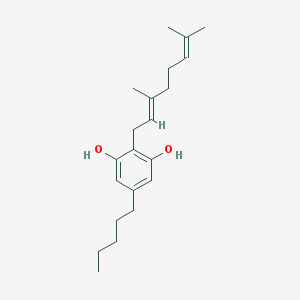
Cannabigerol (CBG) is not considered psychoactive and is known to block the psychoactive effects of THC. It has been shown to stimulate the growth of new brain cells and bones. Neurogenic compounds are extremely rare which makes CBG a very worthwhile subject for more research. CBG also is antibacterial, anti-tumor, and aids with insomnia. It is effectively impossible to overdose on CBG; it usually exists only in trace amounts in a processed plant, this makes the already very high LD50 of 22.44g/kg even less. CBG is considered a ‘stem cell’ cannabinoid and can change into different cannabinoids, altering the overall effects of the plant. Some of these cannabinoids CBG morphs into are THC ,CBD, and CBC which all share the same molecular formula but have a different structure.
Therapeutic Uses
Analgesic – Relieves pain.
Antibacterial – Slows bacterial growth. Anti-Inflammatory – Reduces inflammation systemically. Anti-Insomnia – Aids with sleep. Anti-Proliferative – Inhibits cancer cell growth. Bone Stimulant – Promotes bone growth. Neurogenic – Helps stimulate the growth of new brain cells.
Currently Being Studied For
Glaucoma: A 2009 study found both CBG and THC to be very effective for relieving the intraocular pressure from glaucoma. This is an area that will undoubtedly be receiving more research in the years to come.
Painkiller and Anti- Inflammatory:Recent research suggests that CBG has anti-inflammatory and analgesic properties and recommends further study.
5-HT1a Receptor Agonist/Antagonist?: CBG appears to do something at the 5-HT1a receptor that is not fully understood. It modulates how other cannabinoids affect us especially at this brain site, which is the hub of emotions and depression regulation in the brain. Depending on the study evidence suggests that CBG may help your depression and anxiety, or possibly block certain anti-depressant drugs. One study in rodents showed that if the right combination of CBG and CBD were present the CBG would block some of the anti-nausea effects of the CBD, but it could not quite identify why (other than it related to the 5HT1a receptor).
Dravet Syndrome/Seizures: Anecdotal evidence and some current studies suggest that CBG may be beneficial to patients with Dravet and other seizure conditions. A new tincture was just released at Harborside Health Center which is the first CBG-rich tincture on the market. This tincture, named Jayden’s Juice after Jayden David, the young boy with Dravet syndrome made famous by Weed Wars, is currently what Jayden is using to combat his seizures instead of a purely CBD rich tincture. A study from earlier this year also suggests that CBG may help with seizure management, but the mechanisms aren’t fully understood.
You may have heard of for-proft prisons, also called private prisons, but have you heard about policing for profit? I remember a time when cops proudly branded the motto “protect and serve” on the sides of squad cars and police stations. I wonder when that was amended to be “to protect our profit margins by serving us your property?”
This is not a new problem, it goes back years with some local police pioneering the practice as early as 2006. Tenaha, Texas, was one of these pioneers and recently lost a major class action lawsuit to the countless victims of highway robbery by the police. State records show the use of asset forfeiture in Texas going back to 2001, with totals seized in the hundreds of millions of dollars. Federally, the Department of Justice claimed $1.8 billion in assets in their asset forfeiture fund. This fund has had time to build up, a good 24 years that we have records, and over that time the Feds seized over $12 billion in property, largely related to the war on drugs. But it goes back even further than that, all the way to the founding of this country; the 4th and 5th Amendments were created to protect we citizens from abuses like these that were commonplace under the crown. Now we have come full circle and are left with robbers marauding our highways in the employ of “the crown” of the imperial presidency.
You may begin seeing a common thread developing here, black and Latino people are stopped by (almost exclusively) white cops, and forced to turn over all kinds of personal possessions not related to crimes, especially since they are innocent of crimes. Take this case out of Tenaha, the individuals stopped were not breaking any laws; contrary to popular belief it is legal to possess a pipe (for tobacco or as a gift, like in this case). When they get to the police station they see a pile of watches, jewelry, and other valuables; that sounds like a Robin Hood-esque pile of plunder but perversed and reversed stealing from the unfortunate to give to privileged white cops.
I normally don’t use Privilege Talk, as I feel its often counter-productive, but the ability to legally rob someone under threat of pain or imprisonment is certainly a privilege, and it was clearly abused. Is abused, this isn’t over because one class action lawsuit was won. There are local police and federal agents across the country still doing this. A major raid of more than a dozen state-legal dispensaries and two private residences just happened in Denver, Colorado. While on paper the federal and local agents involve claim it is a hunt for connections to Colombian drug cartels, it is also an informal reason to confiscate over $2 million in jewelry and money as well as another million in cannabis plants. As someone who works in the medical cannabis industry I want the bad players out of the game more than anyone. Unfortunately it does sound like there are people with cartel ties in Denver, but more unfortunately it sounds like Feds used this as a blank check to smash and grab all over the place.
This issue of civil asset forfeiture feeds into related issues of racial profiling and stop and frisk abuse, like this extreme case in Florida which is also resulting in a class action lawsuit against an abusive local police force. Yet again it is mainly white cops harassing and abusing non-white folks.
Read for yourself:
“Earl Sampson has been stopped and questioned by Miami Gardens police 258 times in four years. He’s been searched more than 100 times. And arrested and jailed 56 times. Despite his long rap sheet, Sampson, 28, has never been convicted of anything more serious than possession of marijuana. Miami Gardens police have arrested Sampson 62 times for one offense: trespassing. Almost every citation was issued at the same place: the 207 Quickstop, a convenience store on 207th Street in Miami Gardens. But Sampson isn’t loitering. He works as a clerk at the Quickstop.”
I’m not sure what about that one can consider police doing their job. It sounds like they have a vendetta against Mr. Sampson and the 207 Quikstop. It wasn’t just Earl though, police regularly harassed countless customers of the 207 Quikstop, often abusing “Terry” stops to do it. A Terry stop is a stop and frisk meant to search someone suspected of committing a crime for a weapon. New York City police are famous for abusing this to practice to make NY’s legally decriminalized cannabis still illegal as long as you are poor and not white. In fact, the situation in NYC is so dire the courts have stepped in to block the practice.
This is not why we have police, they were meant to protect and serve the public, not brutalize and rob them. This is why it warms my heart to see more discussions of community policing and see police forces actively implementcommunity policing policies.
I feel that the war on drugs is one of the most important proxy battles we can fight for freedom. While there are numerous battlefields, I feel that the war on drugs, and the Prison Industrial Complex it feeds, is one of the most insidious evils perpetuated by my government, making it my battle to win. Though not my only battle.
Now, if there is only thing I like about as much as I love cannabis it is tea. I have always loved it, green, white, black, oolong, sencha, rooibos, chai, loose leaf, bagged – tea is tea and it is a wonderful thing. I do not personally know Oshan Anand, though many of my friends do. I only found out about his amazing tea house and all the work he has done for Bay Area tea culture after he was sent to prison for intent to distribute MDMA and psychedelic mushrooms; both charges he plead not guilty to and is appealing. If you weren’t aware, court isn’t cheap and running a tea house is not normally how one gets rich. Oshan needs our help if he is going to get his appeal and get out before his 12.5 year mandatory minimum sentence.
If you are like me and part of a growing majority of Americans who feels that the drug war is criminally wrong please take after my example and donate to Oshan’s defense. This young man is not a criminal, we don’t have prison’s to lock up non-violent teahouse owners; prison is for hardened criminals like murders and rapists. If you can’t donate, Oshan is able to take letters; please write Oshan and help return the sense of community to his life that has been stolen from him by the state.
While this post has focused solely on Oshan Anand, someone who to the naked eye is “a white guy,” the vast majority of those incarcerated for drug crimes are under 25, male, and black or latino. The arrest disparity is so bad it has been rightfully called The New Jim Crow and led to the creation of Orange is the New Black, who’s title is a subtle shout out to all the inmates in orange working as slave labor for Walmart.
As a last comment, while I referred to Oshan as a “white guy,” I loathe that term. I used it because he, like me, passes as white to the naked eye and thus will get pigeon-holed as ‘an awful white male oppressor’ by strangers who can’t be bothered to learn who he/I really are. That whole logic of, “you’re X/Y/Z you won’t understand” is a way to keep people down and divided, while ignoring a myriad of diversity. Diversity, like how Oshan and I are Buddhists; or how I am white and genderqueer. One can assume by Oshan Anand’s name there is something non-white there, like my own smattering of Cherokee. There is more to diversity than skin-color, but when you are talking about prison it is ignorant of the facts to ignore race.
Please, donate to Oshan’s defense, help him and every non-violent drug offender get their Constitutionally guaranteed freedom.
I’m not sure if you’ve seen this video that has been making the rounds online today, where a police officer fires at five children and there mother after a traffic stop goes awry. I have mixed feelings on this one, like in many cases of supposed police brutality and other misconduct. I feel like I have a pretty solid hunch on what went wrong here and in what order, knowing that it is easy to see why it went wrong. I feel both sides acted improperly. Oriana was clearly not setting a good example for her kids, but the police were presenting an awful and barbaric image of the state.
A mother is on a family trip with her five children from Memphis to the Rio Grande, as she tells the officers during the stop. She is stopped for driving with expired tags and speeding, going 71 in a 55, a fairly common speed for American roads these days yet because of antiquated traffic laws it is considered a “serious traffic violation” in New Mexico (perhaps even reckless driving). The first problem here is a systemic issue, people habitually drive over the speed limit on every road in this country. The laws are what are on the books, written by generations past and not always applicable to our times, they are not what people habitually do.
In the traffic stop the officer informs the mother, Oriana Ferrell, that she was speeding and she is to turn off her car while he returns to his for something. She takes off and he pursues, she soon pulls over again. Presumably while pursuing he called for back up. While the dash cam subtitles show the cop saying he will be right back, perhaps his exact words were more ambiguous, perhaps they had a miscommunication and that is why Oriana drove off.
The second time around he opens the drivers door and asks her to get out. At this point she mentions the family trip and specifies that she is not trying to run, which is why she stopped again. After she refuses to get out of the vehicle the officer reaches in the car, presumably to pull her out. Refusing to get out of her car was her second major mistake. At this point there is no way to see what the officer is doing in the car and it will be interesting to see what Oriana and her children have to say. Regardless of what is being done it is enough to provoke her 14 year old son to get out of the car to try and help his mother, a quick flash of the taser scares him back in the car. Oriana now steps out of the vehicle, we cannot hear what is said but the body language is not a good sign and she bolts for the open car door. The officer grabs her by the wrist to restrain her which provokes another attempted assault by her son (hard to tell, he may have actually tackled into the cop), again fended off by a threatened tasing.
When back up arrives instead of blocking in her car so she cannot drive off and working to de-escalate the scene they start smashing windows like looters in a riot. The fear of broken glass lacerating her children seems to be what provokes Orianna into driving off a second time. This time things are different, Officer Trigger-Happy is on the scene now and fires at least three shots at the car, and the other two officers (you can even see one dive for cover in the video, clearly fearing for his life). Oriana doesn’t stop her car again until she is in a populated and safe place, a motel parking lot. Her lawyer maintains that she drove away to get somewhere public because she felt the officers were threatening the lives of her children and herself. John Miller, a former assistant director with the FBI, makes note that many departments have laws against firing at moving vehicles and other officers. Miller also notes many other oddities of the case that led up to the disastrous outcome, such as Oriana’s initial choice to flee.
While the video just got released online today, the incident happened a month ago. Since then Oriana and her son are both out after initial arrests. Her son was charged with battery of an officer and resisting arrest. Oriana was charged with five counts of child abuse, aggravated fleeing an officer, resisting an officer, reckless driving and possession of drug paraphernalia. Officers claim they found two marijuana pipes in the car. I have always wondered what, in absence of marijuana, classifies a pipe as a marijuana pipe and not a tobacco pipe or pipe for smoking other herbs. As there was no cannabis actually find I guess I’ll have to put faith in those officers expertise in cannabis smoking and paraphernalia.
Until I read about the drug charges her actions made no sense, now they make complete sense. With a drug charge, Child Protective Services is very likely to take your kids away, even if you are a legal medical cannabis patient. Now this is just my opinion, but I think she was afraid of losing her kids and her life as she knew it, she was afraid of the downward spiral this would set off, for her kids as well. That fear can drive people to do illogical things, like turn a routine traffic stop into a high speed chase which may realize those worst fears. I feel Officer Trigger-Happy should get the book thrown at him, including endangering another officer in the line of duty. The first cop I feel was the most reasonable, but I feel they all overreacted when they should have de-escalated things.
I’ve been there myself. I was 20, with two bottles of alcohol and an 1/8th of pot in a baggie in a messenger bag in my passenger seat. The bottles were half empty from a party the week before, I was sober and was staying that way as the DD. The booze wasn’t even mine, it was my friend’s. I know, it’s an old line, but it is true and fitting. I sat it out, got a public defender and took my lumps in court. It was only about $500 in fines and fees plus 20 hours of community service, spent painting a community theater. I imagine her lumps wouldn’t have been as bad as mine for the initial stop. After the cop claimed he smelled pot I consented to an illegal search and made it legal, then he found all my contraband. In my case, the smell of pot was a mere hunch, not probable cause; I know this now but I did not when I was 20. After my own run in with police and illegal searches I’ve made it a goal to learn about these issues and raise awareness through the spread of knowledge.
I do not know how it would have played out for Oriana had she not tried to drive off that first time. I am greatly saddened that it went how it did, my thoughts go out to her family. It is worth mentioning that if the paraphernalia is the reason she was provoked into running from the police to protect her rights as a mother, Oriana and her children are yet more victims of America’s thoughtless war on drugs.
After my run in with that random homeless gentleman the other day I am left with a non-displaced acute mid-scaphoid fracture, my first broken bone. While the scaphoid isn’t a large bone, one of the little bones that connects the thumb to your wrist, its function makes it rather important. It also is slow to heal due to poor bloodflow to that area of the body. I will likely be posting less often for now and shorter posts; I’ll do my best to keep the quality up. My spirits remain high, life goes on and I keep moving forward. This is but another opportunity to learn and grow. Thus far I’ve almost perfected brushing my teeth and using a mouse left handed, still working on getting my one handed typing up to speed. Finding good in the bad, that is how I choose to live my life.
The accident happened on Thursday morning, at the time I thought my wrist was sprained, maybe broken. I doubted it was broken because I wrongly assumed it would hurt more than it did and swell more. Scaphoid fractures have been known to go unnoticed for weeks. I’m glad I am very in tune with my body. Though I was freaking out when I kept reading about how common surgery is and how often there are lasting problems, I calmed down when reading that non-displaced fractures like mine usually heal fine. I just worry about my breaking, parkour, poi spinning, and everything else I do that takes two hands (like typing fast). Videos of all the previous mentioned physical feats would have been posted up soon, now it will have to wait while I heal.
I have insurance through my mom, not an amazing plan but not an awful on either; this fact makes me luckier than many, though only for another month when I turn 26. While I love the healthcare reform I feel it has messed a lot up as well and is not the best option we could have went with. I personally advocate for a single payer option, since virtually every study done of it show decreased cost and/or better quality of care. If we had a single payer healthcare system I could have just walked into the closest clinic, best clinic, or one with the least wait by checking a clinic database or similar resource.
Instead, the first clinic I called only accepted my insurance for the doctor visit, not the x-ray which they knew was the sole reason I was there. No one felt fit to mention this when I called to schedule an x-ray on Thursday and told them my insurance. This fact was only mentioned after nearly three hours of waiting, forms, and finally briefly seeing a doctor. The clinic’s x-ray tech sent me to the hospital down the road that did take my insurance for x-rays because “they do that all the time”, but with only one page of my 2-page doctor’s order this time.
The hospital staff was much more helpful, and called back to the clinic to speak to my doctor. The doctor was flabbergasted that I left because “this never happens.” The hospital took the x-ray’s and had a far more competent doctor look them over who identified the fracture. Unfortunately they had no urgent care center, only an emergency room (about five times as expensive, only for real emergencies). This meant a trip across SF to the urgent care clinic and my third medical clinic of the day (who could have done all of this themselves, had I only known). Finally, 5 hours later I had a thumb immobilizing splint and a prescription for painkillers, as well as 2-3 different medical bills I would imagine.
The final doctor and I talked a bunch about the new healthcare reform. While it is awesome that being a woman is no longer a pre-existing condition and I was able to stay on my mom’s insurance a few more years, this is not an ideal system. A single payer option would have negated all that run around and me risking further injury. Did I mention I was walking for miles or on the bus? I don’t own a car nor could I drive right now or even ride a bike with my wrist. The icing on my cake with the Affordable Care Act was signing up for healthcare.gov and having them over-inflate my yearly earnings by nearly $3,000, bumping me out of getting benefits. My issues with them looking solely at pre-tax income aside, I know how to do math and I know how to tell what my pre-tax income is from what it isn’t. This isn’t even difficult math.
I’m wondering where the magical mystery $3,000 I am supposedly getting comes from. Maybe something saucy and risque like hooking, maybe stripping? Perhaps more respectable work like union carpentry or as a chartered accountant? Since the government is making it up I supposed they can claim it to be from whatever industry suits their needs. All I know now is that I need to contest their numbers and try to get this either explained or fixed. If I am making $3,000 more a year I want to know how I collect.
[EDIT]: It occurred to me after writing this earlier that I have had limited first hand experiences with a single payer healthcare system, which may have shaped my views. First, when I was sixteen I was in Germany with my father, it was my first time out of the country and I can speak some German. While there my father randomly fainted while we were packing to leave Nuremberg. The doctor we saw that day at a clinic, where I do not recall paying anything, said my father had a small stroke. We got quite good care and got home safe, albeit the trip was cut short. My second experience with single payer healthcare is a bit of an odd example, one people wouldn’t normally think of, Burning Man. At this year’s Burn I got a chunk of playa grit in my eye, which scratched my cornea, put me in medical for three hours, and left me rocking an eye patch for the rest of the Burn. My medical care, medicated eye drops, eye-waterboarding…everything was free. I even had to go to two different clinics, it was still free. My ticket paid for the event insurance which covered many minor injuries. Major ones required an airlift and that you have to pay for.
As I mentioned in my first post I work at Harborside Health Center, the world’s largest medical cannabis dispensary and one setting a law-abiding example for all other collectives to emulate. We’ve been featured in the Discovery Channel documentary Weed Wars and CNN’s recent show Inside Man. We are also winning a major court battle against the Department of Justice in Federal court with the full support of the city of Oakland. This cannabinoid profile is based off something I prepared for work to help educate our staff, the first of many to come. While my manager only asked me to make one for CBD, as time allows, I plan to cover all major cannabinoids (THC, THCa, THCv, CBG, CBCs, etc). A slight bit of background on myself, though my BA is in political science it would be more accurate to say I went to school for a bachelors in cannabis. I wrote numerous research papers about cannabis while in school, I briefly appeared on CNN discussing why we should legalize it to end the war with Mexico’s cartels, and I was a regional director for Proposition 19 as well as 2012’s failed Regulate Cannabis Like Wine act. That is just the tip of my drug policy activism and merely the cover of my activists resume, but all that is terribly relevant to mention now. Future Cannabinoid Profile posts won’t bother with this introduction, I’ll just jump right into it from now on.
CBD is non-psychoactive and it is a powerful anti-psychotic drug, valuable for sufferers of psychosis or schizophrenia. CBD has been shown to be at least as strong an anti-inflammatory as Ibuprofen and at least as effective as THC for treating pain and managing tumors. CBD has a wide range of therapeutic uses ranging from physical ones like pain relief to mental ones like relief of anxiety and depression. CBD is also neuroprotective and neurogenetic, protecting the brain and promoting the growth of new brain cells. CBD has been shown to be extremely effective in treating seizures.
Due to the fact that it is non-psychoactive and strongly medicinal even in small doses CBD is highly recommended for treatment of children, the elderly, and anyone who wants to remain clear headed yet medicated. CBD appears to change how THC affects the body, making it less psychoactive and more therapeutic; this process is still being actively researched. CBG ,CBD, and the CBC’s all share the same molecular formula but have a different structure.
Therapeutic Uses
Analgesic – Relieves pain.
Antibacterial – Slows bacterial growth.
Anti-Diabetic – CBD is the only cannabinoid identified that helps lower blood sugar levels.
Antidepressant – Relieves symptoms of depression.
Anti-Emetic – Reduces vomiting and nausea.
Anti-Epileptic – Reduces seizures and convulsions.
Anti-Ischemic – CBD is the only cannabinoid identified that reduces the risk of artery blockage.
Antipsioratic – CBD is the only cannabinoid identified to treat psoriasis.
Anti-Proliferative – Inhibits cancer cell growth.
Antipsychotic – Tranquilizing effects relieve symptoms of psychosis, two terpenoids also help (linalool and myrcene).
Antioxidant – Prevents the damage of oxidation to other molecules in the body.
Antispasmodic –Suppresses muscle spasms.
Anxiolytic – Relieves anxiety.
Bone Stimulant – Promotes bone growth.
Immunosuppressive – CBD is the only cannabinoid identified that reduces function in the immune system.
Intestinal Anti-Prokinetic – CBD is the only cannabinoid identified that reduces small intestine contractions.
Neurogenic – Promotes the growth of new brain cells, specifically within the Hippocampus (an area of the brain responsible for memory and spatial awareness).
Neuroprotective – Slows damage to the nervous system and brain.
Vasorelaxant– CBD is the only cannabinoid identified that reduces vascular tension.
Currently Being Studied For
Cancer: A study was published in 2007, regarding ongoing research being done at San Francisco’s California Pacific Medical Center, showing that CBD inhibits a particular gene (Id-1) which is responsible for the growth of cancer cells in the body. By inhibiting this gene CBD shuts down the growth of cancer cells, potentially stopping or even reversing tumor growth. While it is premature to say that cannabis, specifically CBD, cures cancer it is worth further research.
Dravet Syndrome/Epilepsy: In October of 2013, the Food and Drug Administration (FDA) approved two clinical trials assessing the therapeutic uses of CBD in treating intractable epilepsy in children. The CBD preparations are being made by British pharmaceutical company GW Pharmaceuticals, makers of Sativex. Dravet is a rare seizure disorder where usually children will have their first intractable seizure before they are even one year old, in exceptional cases seizures can last for hours and potentially over 24 hours. Where I work we have several patients who suffer from severe seizure disorders, like Dravets. Patients like Jayden, who has achieved near celebrity status for his great success in managing Dravets with a CBD-rich tincture.
Parkinson’s Disease: Two studies, one out of Israel and one case study, have come out this year showing that CBD rich cannabis may be a treatment for “complex sleep related behaviors” caused by Parkinson’s Disease. It would seem Parkinson’s Disease changes the pattern of rapid eye movement that happens while you sleep, causing sleep disturbances and CBD will mitigate that.
Depression/Anxiety: CBD stimulates the 5-HT1a receptor in the brain, this region of the brain is involved in the re-uptake of serotonin and other processes that aid with depression and anxiety. The antidepressant properties of CBD are very similar to the trycyclic antidepressant Imipramine (also being evaluated for panic disorder).
Schizophrenia/Psychosis: CBD is a powerful antipsychotic currently being considered for use in treating schizophrenia and other types of psychoses. Cannabidiol appears to have a very similar chemical profile to certain atypical antipsychotic drugs. CBD also slows the degradation of the endocannabinoid anandamide, resulting in increased levels of anandamide and lower rates of psychosis. A recent study found CBD to be as effective at treating psychosis as the anti-psychotic drug Amisulpride.
Liver Protection Against Binge Drinking: A study just came out showing that CBD protects the liver against damage from binge alcohol drinking by way of inhibiting oxidative stress and increasing autophagy. Put into layman’s terms CBD encourages the old and overused parts of cells to recycle into newer parts and controls free radical damage.
Inflammatory Bowel Disease/Crohn’s Disease: CBD shows a lot of promise for controlling the inflammatory responses and discomfort caused by Crohn’s disease and IBD. CBD has so much potential to regulate these diseases that it is being considered for a new class of IBD drugs.
Alzheimer’s Disease/Dementia/Memory Loss: Far from the stereotype, cannabis actually improves your memory and cognition abilities. CBD’s strong neuroprotective and anti-oxidative effects work together to counteract the effects of aging on our brains, fighting off memory loss and dementia.
If you read this post and are still craving more information check out this video and the references listed below.
For my first post permit me to humor my love of the movie Dune.
A Beginning Is A Very Delicate Time. Know then that my name is Mitchell Colbert and it is the year 2013. The Known Universe is ruled by a panoptic technology that is enmeshed in everything we do, called The Internet. In this time, cool kids write about what they do and post it on the Internet for complete strangers to read it, and maybe laugh, and perhaps expand their consciousness. The Internet is vital to modern life and available even during space travel.
Humanity, and a subspecies of Trolls who have been mutated by thousands of hours on /b/, use the Internet to read the news, watch funny cat videos, and post 140 character updates to Twitter. We can stay connected to any part of the universe without moving from our chairs.
I’m done paraphrasing Dune for now, but I felt it an appropriate way to start things off. Now that I have gotten the ball rolling permit me to tell you why I have decided to create this blog and join the ranks of those illustrious cool kids who tell people about what they do on the Internet.
This blog is not a political blog, it is not a photography blog, cooking blog, DIY blog, or any sort of themed blog, but it will probably include all those topics and more. This blog is about things that stir up my passions so much that I need to share them with the world. Expect political posts to keep you up to date on the news the networks don’t cover, expect me to share life hacks to make your life easy mode, and expect me to post plenty of recipes/photos/poems. I am a person who views knowledge as a communal good that should be shared with as many people as possible, this blog is my means to that end.
I will be trying to post with some regularity, once or twice a week. That may not always happen since, unlike professional bloggers, I don’t get paid to write this and work a real job, at the world’s largest medical cannabis dispensary, Harborside Health Center. You may now be wondering how much of a real job working at a medical cannabis collective actually is, read on, dear readers, and find out.
A beginning truly is a very delicate time, and how something begins can predict how well it will fair. I picked today




 Well Suited For Life