Last night I went out to see Infected Mushroom and Savant, it was my first time seeing either and the first I had heard Savant (who was amazing). It inspired this poem, I may still add more I may leave it here. I want to do some readings on it before deciding, but I am definitely bothered by one stanza ‘missing a line,’ but not sure what I want to add/subtract. Time till tell.

The Man Burns (2013)

The Man Burns (2013)

Silence

In that silence you can hear a pin drop,

Like the bass dropped only moments before.

Body still thumping pulsing to ghostsounds,

That drown out the reality that surrounds.


Body becomes subwoofer, reacting to bass and sub-bass,

That falls loud enough to drown out the treble and mid-bass.

The bass that falls like a thunderclap, manna from Heaven.

The bass that plays now only for me, a mental music box.


And now, in that eternal silence… lifetimes, eons, fit into seconds.

Like a furry coat fits into a handbag on your way home,

Too overheated still to wear despite the winter’s cold chill.


All around, the silence dwells, a veil covering mouth, muted speak no evil,

Stuck on introspection, pausing for self reflection in these quiet moments.

The joint sits burning in his hand, my hand, her hand, our hands.

It burns but doesn’t go out, like the sound resounding in my head.


What I wouldn’t do for a beat that grabs my heart by the strings,

Forcing me to dance like a marionette, DJ as puppetmaster.

What I wouldn’t give for a beat that massages my neo-cortex,

Producing vortex of thought, paroxysm of emotion.


And in that silence, I see the joint drop,

Like the pin I heard a moment before,

Reminiscent of the bass, but a memory

Embers on the floor.

Continuing where yesterday’s blog leftoff, here are some famous examples of stories, myths, historical and religious figures who conform to the archetype of the Hero’s Journey.

MAJOR SPOILER ALERT: The first 6 are all historical/religious but then I go on to movies/books and I’d hate to ruin a plot for you without warning you first.  Specifically, I discuss Stranger In A Strange Land, The Lord Of The Rings, and Fullmetal Alchemist.

Heracles with Cerberus.

1. Hercules/Heracles – Hercules is the Roman adaptation of the Greek hero Heracles, son of the god Zeus and a mortal woman, making him a demi-god. Heracles is most known for twelve trials he had to endure, one of which was going to the underworld to capture Hades three headed dog Cerberus. Going to the underworld of Hades is a figurative death Heracles passes through in order to best his labors and recover his sanity while achieving immortality. The purpose was not becoming immortal, that was merely a side perk, the main goal was atoning for slaughtering his children after he was driven mad by Hera.

Baby Achilles takes a bath in the River Styx.

2. Achilles – Another Greek hero, Achilles was also demigod like Hercules. Instead of being immortal like Heracles, Achilles was invulnerable to harm everywhere on his body other than his heel, creating the metaphor Achilles heel. His mother baptized him in the river Styx, the river of the underworld, which granted him immunity to harm everywhere except his heel, where she held him. Ultimately he died in the Trojan War, that grand battle to bring home the beautiful Helen of Troy to her native Sparta. Many warriors fought in this battle, some died; the cunning Odysseus, both Ajax the Great and Ajax the Lesser to name a few of the best known. Of all the many heroes mentioned in Homer’s Iliad and the Odyssey, the only one better known than Achilles is Odysseus himself who is a main character in both books. Achilles has gained eternal glory through his death for himself but more importantly for Greece.

Jesus Christ, Superstar!

3. Jesus – Jesus Christ was potentially a real person who lived in ancient Mesopotamia, born in 1 anno domini (AD). There is much dispute over whether Jesus was real or is myth, and the belief that he is the son of God. I believe he was a real man, likely not a pale Anglo white man. He was a religious philosopher of sorts and also had a stripe for politics, this won him few friends with the Romans who just loved crucifixion. Jesus preached a new way of doing things and shook things up in the social order which annoyed those in power. Jesus is said to be the son of God, the product of a miraculous birth, sent to earth to be killed to man’s sins, only to be reborn and go to Heaven. The story of Jesus is a perfect telling of the major steps in the Hero’s Journey.

Buddha under the Bodhi Tree.

4. Buddha – Buddha was a real flesh and blood man before attaining enlightenment, a prince from the Himalayan foothills named Siddhārtha Gautama. Unlike Jesus, there is no dispute about his existence, merely differences in opinion on the nature of his divinity and enlightenment. Buddha means “enlightened one,” and contrary to the beliefs of some there is not one Buddha but countless. Anyone can become a Buddha, an enlightened one, given the right environmental factors. For Siddhārtha, he needed to meditate under the sacred fig tree, now called a Bodhi tree in honor of the enlightenment achieved beneath its boughs, like a religious Sir Isaac Newton. Buddha does not physically die during his Hero’s Journey, but his ego is allowed to die. The death of the ego is a central to many Buddhist sects and The Buddha was the first to demonstrate how this can be done and why it is desirable. That was The Buddha’s glory.

President John F. Kennedy

5. John F. Kennedy – President John F. Kennedy was America’s youngest President until Obama, our first non-Protestant President, and a brilliant statesman/playboy. He was a real American hero on many levels who did a lot to advance civil rights and was an early advocate for wave-powered electricity, just to same some of his glorious exploits. He was tragically assassinated during his first term.

Reverend Martin Luther King Jr

6. Martin Luther King Jr. – Like JFK, Martin Luther King was assassinated for shaking up the present day politics. MLK and Malcolm X both occupied crucial roles in the civil rights movement, aided in a political capacity from JFK. Martin Luther King was a preacher who was instrumental to the success of the American civil rights movement, most known for his legendary I Have A Dream speech.

Rodin’s “”Caryatid Fallen Under her Stone,” a central piece of the allegory in the book, and an allegory for Mike himself.

7. Michael Valentine Smith – Mike is the main character in Stranger In A Strange Land, perhaps the most famous novel by Robert Heinlein. Mike is about as blatant a Jesus allegory as one can be without the Church coming after them for copyright infringement. A Muslim character even eludes to him being The Prophet reborn. While one can read a Jesus allegory in Stranger there is much more to the story than that. In the end of the book, Mike is martyred, not on a cross but in his own way and that is his death on the Hero’s Journey. But as anyone who has truly grokked the book knows Mike cannot really die, no one ever really dies as long as something has grokked them.

Gandalf, The Grey

8. Gandalf – In the Lord of the Rings there are several heroes who die but the one who best embodies the Hero’s Journey is the wizard Gandalf the Grey. Gandalf fights the Balrog in Morea and in the process is killed only to be reborn as the more powerful Gandalf The White. His death empowers him to further glory along his Hero’s Journey. Other heroes also die along the way, physical deaths, spiritual deaths, and perhaps even some deaths of ego.

Ed and Alphonse Elric.

9. Alphonse Elric/Edward Elric – In the anime Full Metal Alchemist both brothers experience various deaths along their journey, in both series and in the movie as well. Alphonse actually dies before the series even begins but his soul is brought back to the living world at the expense of his brother’s arm which is Ed’s first death, from there it continues until you wonder how either character keeps sane. Before all of that, the death that portends all others is that of their mother, her death is the catalyst that literally makes our heroes into the men they are destined to become.

I hope you all had a good Christmas. While I am not Christian myself I take time off for my mother’s birthday on the 24th and time with my extended family on the 25th. In case you are curious I was raised as a Nichiren Buddhist and my current spirituality is that combined with Tibetan Dzogchen Buddhism, alchemic philosophy, and smatterings of the Abrahamic faiths. Though I do not believe in Jesus as the son of God and that December 25th is his birthday, if you are a Christian, I imagine you will feel a pretty strong affinity for the sentiments in this blog regarding Jesus (this truism applies to him rather strongly).

The other day I was thinking about the phrase “the hero must die,” and how it kind of is a truism. A truism, if you didn’t know is a statement so obviously true that it needs no further explanation, though it has varying degrees of meaning. The term dates back to the early 1700’s, making it an invention of the enlightenment era.

The first truism I’m going to briefly dissect is the timeless phrase known to writers world-round, .” I cannot find an exact date for the first usage of this truism, but it is likely to be rooted in the ancient Greek’s conception of the Hero’s Journey, a story archetype. The archetype can be broken down into 8 stages, one of which is death. Though different people have different interpretations of the stages in the Hero’s Journey the death of the hero is unanimous, though it is not always a physical death. Sometimes death takes the form of other types of loss, a spiritual or economic death for example. The entire Hero’s Journey, all the death and loss, is in pursuit of what the ancient Greeks called kleos, which means glory or fame and also is the name for a song or poem that conveys glory. Kleos is “both the medium and the message of the glory of heroes.” For the ancient Greeks, the concept of glory was a very altruistic concept done for the good of the many not the good of the hero.

Stages Of The Hero’s Journey

  1. Miraculous conception and birth
  2. Initiation of the hero-child
  3. Withdrawal from family or community for preparation
  4. Trial and Quest
  5. Death
  6. Descent into the underworld
  7. Resurrection and rebirth
  8. Ascension, apotheosis, and atonement

This was originally meant to be one post but it had become large enough where I have to make it two posts. Check out the second half which profiles 9 Hero’s Journeys for you, from every age of history and many different cultures.

Elizabeth Warren, the chief watchdog of Wall Street, has warned us that the biggest banks are now even bigger than when they caused the financial collapse of 2008. The four largest have grown 30% larger and the five largest banks represent over half the market. That brings the word antitrust to my mind, but that is about as likely as world peace at this point. No, the current crop of US politicians in both major parties are far too business friendly to go for the ‘nuclear option’ of pursuing an antitrust suit against a major corporate bank. It will take some new blood to pursue new options, Elizabeth Warren being but one example.

If this November’s elections can be read as a sign of anything it is that people are fed up with austerity and they want politicians who will work for the working class. One tangible example being the election of the socialist Kshama Sawant to the Seattle city council, in a state who just legalized recreational cannabis. Washington is definitely moving in the right direction, but we will have to see how things go in a few months to really know how well the cannabis legalization is going. Another major progressive win was  the 73% landslide that road Bill de Blasio to victory as the new mayor of New York, dethroning the former king mayor Bloomberg. While we have more progressives winning in local elections we lack true progressives in the federal government. There is Elizabeth Warren and Bernie Sanders, that’s about it. There are also rumors about Elizabeth Warren running for President in 2016, which would probably the only ticket the Democrats can put forward that I’d vote for. Which is still better than the no chance the Republicans have for my vote. This may be the first Presidential race I sit out on due to a lack of interest in all candidates…it is still two years from the election though and two years is a long time.

President Obama may have been progressive in 2004 when he advocated for cannabis decriminalization and a single payer option for health care, but a decade changes a man and he is as much an establishment Democrat as Nancy Pelosi now. This can be seen best in his devolution on the issue of cannabis. Where he was once firmly in support of legalization, even being the leader of a drug gang, his support is now so weak he is willing to call commuting the sentences of drug war 8 prisoners a win for human rights. We’re talking about a man with a secret ‘kill list’, that is not the kind of progress I want our progressive movement to embrace, that is Orwellian at best and Stalinist at worst. I support much of what President Obama has done, but I oppose at least that many of his actions too. Like President George W. Bush before him Obama is a mixed bag; he wins a Nobel peace prize yet keeps a secret kill list, oversees more paramilitary raids of cannabis dispensaries than Bush and gave the go-ahead to a spy game so massive it makes Watergate look like child’s play.

You might now be asking yourself, “what should a progressive movement look like in America?” Here is what I envision it to look like and what I hope its priorities will be. I imagine it will look much like the 73% majority  that rode Bill de Blasio to victory in New York, inclusive of nearly all races, religions, and demographics conceivable. This new progressive movement will not be bound by race or religion like past political movements; it will progress beyond race to be a movement focused on results, such as raising the minimum wage federally improving the lives of millions of all races. That isn’t to say this new progressive movement will be colorblind, if anything it will be more sensitive to the factors that make us up than any former movement and it will fight for our right to be ourselves, whatever that self may be. This new progressive movement will work to progress gender equality and end de jure and de facto discrimination against gender non-conforming people. Tied in with gender equality is equality for all sexual expressions and sexes. Simply put, this new progressive movement should fight to advance the progress of as many people as possible, especially those  who are presently disadvantaged.

This movement is likely to include some uncommon alliances, like one we may now be seeing between the drug policy reform/drug legalization movements and gun rights advocates. There also is a clear synergy between the drug legalization/prison reform movement and the effort to provide more funding to our schools (here is a protest to save public education, here is one for drug policy reform, notice the similarities?). The reason for the natural alliance between education and prison reform is illustrated beautifully by this drawing.

School-to-Prison-Illustration

As schools are robbed of funding the quality of educational environment plummets, leading to more crime down the road when people resort to crime to pay the bills  their abysmal education cannot. This is a self-perpetuating downward spiral that can very easily be reversed with more people flooding into schools instead of prisons. This would also free up billions of dollars a year in federal and state budgets due to less policing of non-crimes like possession of cannabis.

One of my friends that has been reading this blog has been badgering me to post some dating advice since I tend to be good with that. I wanted to start my dating advice with an important topic, a priori, that is STD testing. Getting yourself tested is where any pursuit of dating should begin.

I just went in for my tri-annual preventative STD screening, and like always got back my favorite results – across the board negatives. Three times a year may seem like a lot but I am generally a pretty sexually active person and I like being cautious. I am polyamorous, meaning I am romantically involved with and committed to more than one person at a time, and so are some of my partners. This certainly can open you up to more risk than a monogamous lifestyle if you don’t communicate well with your partners. No judgment on monogamous people, but apparently only polyamory is cool enough for its own website so you monogamous folks get a Wikipedia link (business idea for monogamy.com). Monogamy is great though, a totally valid sexual expression like being polyamorous, or being asexual. I’ll tell you one great thing about asexuality, there is a WAY lower chance of getting STDs though still a chance (blood transfusions, sharing a toothbrush with someone herpes positive, etc).

Communication is key to any functional relationship, be it romantic, monogamous, polyamorous, a friendship, or anything else. Communication is especially key in poly relationships, such as clearly discussing rules and boundaries, ones needs and desires. One established rule in my relationship is you can only be involved with people who have been recently tested and are clean; if in doubt ask to see paperwork. This may all seem like too much effort to you, if that is so then you aren’t paying attention, STD/STIs are far more common than ever and beginning to mutate into new forms. It’s only your life, you only get one and real life has no save points, no extra lives; it isn’t a game and you only get once chance at it. Though life isn’t a game live it like it is, be serious but have fun doing it. I play every chance I get through parkour, singing, dancing, or whatever else strikes me.

What’s great about getting STD tested over other tools in our sex-positive tool box is that medical testing doesn’t violate anyone’s religion. The pope has no qualms with you keeping your partner disease free. That means you should go get tested regardless of your faith, regardless of your sexual preference, and regardless of whether you are monogamous or polyamorous. Even if you’re not having regular sex with different partners, if you are planning to hetero-till-death-do-us-part marry someone you should get tested first. STD’s are for life, coincidentally like marriage, though also like marriage some can be treated and do not last forever.

Now that we have established why everyone should be tested, including asexual people (for their friend’s benefit if nothing else), let’s move on to the where and the how. Getting an STD test is a fairly painless process, about as painful as getting blood drawn. I am honestly needle/syringe phobic, even in movies they freak me out and cause a physical reaction; despite this I still go ‘under the gun’ three times a year because this matters far more than a little pinprick pain.

Where to go is a different matter and depends largely on where you live and whether or not you have insurance. Even though I have insurance I still prefer to go to Planned Parenthood because they are cheaper, friendlier, and best of all my money goes to a good cause instead of asshole Blueshield insurance. If you live in California, like me, breath a sigh of. While most states are limiting abortion access, our legislature just passed a new law expanding access to deal with the fact that 52% of counties in CA don’t have abortion access.

The how of STD testing seems pretty intuitive, go get tested, but there are many steps and potential pitfalls along the way. You can go through your insurance for what they will cover and use your primary care doctor; my insurance is rather limited which is one reason why I prefer Planned Parenthood. If you at LGBTQ, namely trans or gender queer, PP is wonderful for respecting your gender expression and asking your preferred gender pronoun; they offer a very safe space. For some things you don’t even need a doctor anymore, we’ve reached an age were HIV can even be tested for at home. Still, some areas of testing are severely lacking, such as HPV where we have no way to test men.

My hope in this post is to cause as many of you readers as possible who have not gotten tested to go out and get tested. My hope is to debunk myths about the pull-out method being just as good as condoms (for preventing pregnancy maybe, but enjoy your STDs). My hope is that with one blog post I can prevent the spread of HIV/AIDs, but I know it isn’t that simple, it takes more than hope. It takes you going out there and practicing safe sexual practices everyday. That is how you manage to be both sexually active and STD free for life; communication, regular testing, and condom use go a long way. Failing all that there is the Immunity Project who is working on a vaccine for HIV/AIDs which they plan to give to the world. Check out their work and see if you can help them out; I cannot think of a worthier cause.

As many of my readers are well aware by now I am in a cast with a broken wrist after a recent bicycle crash. This is my first time in a cast and it has taught me some valuable things I want to impart to you.

If your cast gets wet it will smell bad, do whatever you can to prevent this. Many of these tips apply directly to that.

1. If the padding starts to wear down and you feel chaffing get some cloth tape and tape over the area that is bothering you, perhaps even tape some cotton balls there for more padding if needed.

2. When showering use a bread bag or a similar small plastic bag to cover the cast, seal it off with a rubber band; I prefer the thicker bands that come on broccoli.

3. If your cast does get wet dry it as quickly as possible with a blow-dryer held at a far enough distance where it won’t burn your skin or melt the cast.

4. If your cast does begin to smell bad use essential oils to mitigate the smell. I’ve been using lavender and grapefruit, one application of oil would last a day or two.

5. This one is obvious but needed, Don’t take your cast off for any reason!

The rest are not specifically cast related but are sound advice to heal broken bones fast based off all the studies I read.

6. Give up cigarette smoking, nicotine slows bone healing; no studies cover cannabis smoking and I offer myself up as a case study.

7. Stop drinking (I wish the doctor mentioned this one).

8. Eat a diet rich in dairy protein/calcium, dark green leafy vegetables, beans, citrus (oranges specifically), apples. Your goal is to maximize your intake of: silicon, copper, iron, and other minerals; Vitamin D, C (including Quercetin), B complex, and the rest. Bones are make up primarily of spongy protein and calcium with mineral pockets layered throughout. Also for healing most soft tissue/bone injuries check out glucosamine chondroitin, this stuff works wonders.

9. DO NOT USE NSAIDs like ibuprofen! Take aspirin or acetaminophen instead. Research shows that NSAIDs can slow bone healing. I wish I knew this a month ago before taking  ibuprofen daily.

I get the cast off on January 2nd if all goes well in my xrays, until then I’ll have to wait and see.

If you are like me then you own a computer and other electronic devices, many people across the world fall into this camp.  If you are reading this blog, chance are you’re one of us. Being a technology user you probably know what a blight tangled wires can be in your workspace. This blog will give you some quick tips to help with that.

Thankfully my room isn't this bad.

From the anime Serial Experiments Lain

As an aside, I love the anime Lain, it is something I watch whenever I feel like the real world is starting to drop away into fiction and blend in with the digital world. I would say it comforts me, but if anything it is quite the opposite;  Lain offers us a mirror of our own world’s future, a possibility of where we are going. Enough on that, back to tangled cords.

1. If you have extra length in a cord bundle it up. Why have excess hanging all over the place if you don’t need it?

2. Try to hide your bundles of excess cord under or behind your computer desk to keep them out of the way and protected.

3. Use the clips from bread-bags to sort your cords. I did not create this one, I merely TumblrdUpon it, but I certainly advocate its use and use it myself to keep things organized. With my set up (pictured below) I color coded my clips, preventing any need to label them. Blue is my monitor because a monitor plug is generally blue. Green is for sound because generally your sound cable is tipped green. Yellow for my clock for no particular reason (alarm clock = yellow like the sun when waking up?). The large white one is from a potato sack and is used for my laptop power cord because the others wouldn’t fit on it.

Bread Clips

See an updated version of this post on The Leaf Online,Cannabinoid Profile – THC!

I will be working to update and expand all of these posts with  time and as I come across more research, if you know of anything I may have missed please bring it up.

Hope you enjoy learning about the medicinal and recreational benefits of THC; remember, all use is medicinal use. There  is no way to stop that THC from preemptively fighting your cancer, even if you ‘just wanna get high’ you’re still medicating.

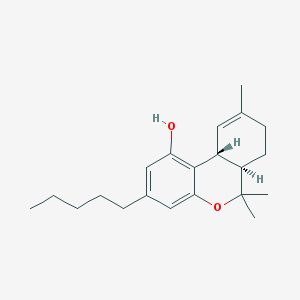
THC

Formula: C21H30O2
Molecular Mass: 314.2246g/mol

Decarboxylation Point: ????
Boiling Point: 157 °C (315 °F)

LD50 (Lethal Dose): 150 lb person would need to eat 1 pound of 50% pure THC hash in one sitting to overdose, ~1260mg/kg (Compare to Nicotine: for mice – 3mg/kg for humans – 40–60 mg/kg) [More on Δ9-THC’s LD 50 can be found here.]

While Δ9-THC is the most common cannabinoid in most plants it is not the only THC in cannabis, it is joined by THCa, THCv, and Δ8-THC, as well as a slew of other cannabinoids, including CBD and CBG. Δ9-THC is the primary psychoactive compound that has been identified in the cannabis plant, though other trace cannabinoids may be psychoactive and many more modulate how THC effects the body. Δ9-THC is the cannabinoid responsible for the fabled munchies that cannabis users speak of; ironically THCv, it’s chemical relative, is being researched as an appetite suppressant (more on that in a future blog).

Therapeutic Uses

Analgesic – Relieves pain.

Anti-Emetic – Reduces vomiting and nausea.

Anti-Proliferative – Inhibits cancer cell growth.

Antioxidant – Prevents the damage of oxidation to other molecules in the body.

Antispasmodic – Suppresses muscle spasms.

Anxiolitic – While not fully recognized as an anxiolitic compound THC does seem to assist in the anxiety associated with PTSD.

Appetite Stimulant – Δ9-THC is the only cannabinoid identified that is an appetite stimulant, giving people the stereotypical “munchies” many users describe.

Euphoriant – Produces feelings of euphoria, promotes happiness and relaxation.

Neuroprotective – Slows damage to the nervous system and brain.

Currently Being Studied For

Cancer: THC has been shown to halt the growth of tumors, and in some cases shrink them, through various methods not fully understood. In one recent case study, an infant suffering from a brain tumor experienced a 90% reduction in tumor size over a year of twice a day use of hemp oil. Veteran cancer researcher Donald Tashkin, in the largest controlled study of its kind, found that daily smoking of THC-rich cannabis resulted in lower instances of cancer than in the general population of nonsmokers! Think about it; all smoking causes cancer by creation of benzopyrene, but despite that THC is a strong enough anti-proliferative to prevent more cancer than the smoking causes. Fun Fact: Burning ANY organic matter creates benzopyrene. This means that barbeque, toast, and even grilled vegatables can give you cancer.

Pain Management: THC has been shown to have great prospect in treating chronic pain because it seems to change “the way the nerves function.” THC also has been studied heavily for its use in treating neuropathic pain, including the pain associated with HIV and  cancer. Recent studies seem to agree that THC changes how we feel pain and makes it more bearable. It is not a pain killer in the sense that it numbs the ability to feel pain, instead it seems to raise an  individual’s pain tolerance making the same amount of pain less significant.

Anorexia Nervosa: THC shows great promise in reversing the weight loss associated with anorexia in studies on mice as well as humans. Even the synthetic cannabinoids dronabinol and marinol have been demonstrated to help with weight loss.

HIV/AIDs: Aside from assisting with the pain and nausea that often are associated with HIV/AIDs, THC directly fights the virus in unique ways that have only recently been identified. A 2012 study shows THC assisting in HIV treatment by its activation of CB2 receptors and CD4 receptors. Cannabis affects our body by interacting with our endocannabinoid system, the CB2 and CD4 receptors are a part of that system. A study from earlier this year expands on the role of THC in combating HIV through its activation of CB2.

Post Traumatic Stress Disorder: Though THC is not commonly considered a treatment for anxiety it has shown promise for anxiety, specifically with Post Traumatic Stress Disorder.

Gastrointestinal Inflammation: THC lowers the incidence of blockages and other gastrointestinal inflammation associated with use of NSAID anti-inflammatory drugs. THC “protects against diclofenac-induced gastric inflammatory tissue damage at doses insufficient to cause common cannabinoid side effects.” A recent survey of Irritable Bowel Disorder sufferers found that 1/6 use THC-rich cannabis to treat the inflammation.

Halent 2011 - Cannabinoid and Terpenoid Chart

References:

  1. Steep Hill Lab, Cannabinoid and Terpenoid Reference Guide; http://steephilllab.com/resources/cannabinoid-and-terpenoid-reference-guide/
  2. Skunk Pharm Research, Cannabinoid and Terpene Info; http://skunkpharmresearch.com/cannabinoid-info/
  3. SC Labs, Meet the Cannabinoids; http://sclabs.com/learn/learn-cannabinoids.html

*Note: Decarboyxlation – A chemical reaction that removes a carboxyl group and releases  CO2, often triggered by heat.


I was listening to one of my favorite songs by one of my favorite folk-punk artists earlier today and wanted to share it with you all. I was introduced to Evan Greer‘s about five years ago through a friend, aside from countless phenomenal political discussions that I will forever cherish, Evan’s music is the greatest gift she ever imparted to me. Evan is a transgendered political activist songwriter with an anarchist bent, she is a very multifaceted individual with a lot of amazing things to say. Her music is to our generation as Bob Dylan was for the hippies; her lyrics better capture the mood of our times than any other songwriter I have come across.

Evan is part of a musical collective known as the Riot Folk Collective, a group started by folk musicians Ryan Harvey and Mark Gunnery in the 90s. While it appears that Riot Folk no longer has their own website with all the music available for donation, it is on both soundcloud and last.fm. I highly recommend checking them out if you’re into melodic punk.

While I am making this post about Fame, Evan’s entire catalog of songs is amazing. Check out I Want Something, Never Surrender, and Love Me I’m a Liberal (Phil Ochs cover) for more good tracks. If you like what you hear Evan is currently on tour around North America. I picked this song because I love the message contained in the lyrics dearly,  though that is quite true of damned near everything Evan writes.

Fame, By Evan Greer

What’s the point of fame
Except to reinforce the social hierarchies we oppose


What’s the point of a name
If it just becomes something that you drop


When you feel insecure
And you’re not sure
If everybody in the room will have heard of your band before
And you’re on tour


And haven’t seen a friend in at least a couple of days
Let me count the ways that I abuse the privilege
Granted to me by this mandolin


And my white skin that bought me my first guitar
Everybody told me boy you’re bound to be a star
Oh yes you are
Boy you’re bound to be a star


And like every major threat
They somehow find a way to buy it
They co-opt what we create
While they get rich and we deny it


The TV tells us there are stars and fans
And there’s just one way to make it
Follow the label’s rules
Use the master’s tools
And when the big deal comes you take it


You’re selling hope to angry kids
Who think that you’re the only ones
Who sing about what makes them sad
Who understand the way they feel


That’s just cuz your label pays
For multi-colored tour posters
So no one ever hears about
The kids doing it for real


And I’m so tired of these anarchist celebrities
Selling $10 shrinkwrapped CDs
Full of paper made from old growth trees
And I know that we all have our hipocrisies


This isn’t about purity or punk rock points
It’s about taking back what’s left of our ideals
And trading in our egos for our dreams


And if I start to act like them
Please call me on my shit
Cuz sometimes I get jealous
I’ll be the first one to admit


I’ve been brainwashed all my life
And now I’m trying to think for myself
I think that I might need your help

I love books and I love movies, I also love examining them to see what they tell us about a society at a given time (Example: Lord Of The Rings is about WWI/WWII in Europe). It can be interesting to see how a common narrative gets built up and developed over time, for example, the narrative of children killing eachother in gruesome ways.

In 1954, William Golding turned heads with his revolutionary book, Lord Of The Flies, about a group of adolescent boys who end up marooned on a deserted island. The book explores the boys downward spiral from civilization and order into savagery and chaos. It is the first book published I have come across where the plot can be summarized as ‘a group of children in an isolated place killing eachother.’ It was so thought provoking that it was later made into a movie by the same name, and even remade.

In 1999 the genre of children killing eachother in remote places had the novel Battle Royale added to its roster, bringing a new movie with it, including a sequel. While it is possible to believe that the remake of Lord of the Flies inspired Battle Royale there are numerous differences between the plots. Both books feature students, but the highschool class in Battle Royale is randomly selected by lottery in a society well aware of the death games played by adults; Lord Of The Flies is random in that the students are randomly marooned. The key difference is socio-cultural. One society has children growing up with the expectation that they may be called to battle and maybe die against their will; the other society is comparable to WWII era England with no such pervasiveness of death. Another difference is the addition of women and a female protagonist to balance the male protagonists (one main, one supporting).

2008 brought us the Hunger Games triology, which took the same general plot of Battle Royale, made it more Western and expanded it into three books (The Hunger Games, Catching Fire, and Mockingjay). The books have caught fire with the public and have quickly been turned into movies; Catching Fire is currently in theaters and Mockingjay is in production. You can currently see The Hunger Games on Netflix. After many silly protests I finally caved and saw The Hunger Games last night, and I’ll admit it is much more than just a Westernized remake of a Japanese film), it is a whole new twist to this half century old plot.

First off, The Hunger Games has more character development than Battle Royale and Lord Of The Flies combined. As someone who cares about plot development I appreciate this greatly. Second, while Battle Royale does involve a totalitarian government of sorts and has some anti-government themes it does not hold a candle to the anti-rich/anti-government sentiments present in The Hunger Games. Third, while every kid in Battle Royale is given a backpack with tools and weapons in them, none receive any training in personal combat. Fourth, though they are being monitored in Battle Royale and can be killed at will for bad behavior it is nothing compared to the 100% full control the government has of the forest in The Hunger Games. They can even craft new animals and summon them at will. Tied into point four, The Hunger Games is a game, a TV show; Battle Royale is televised but not to the same degree.

As someone who went to school for politics and loves plot development I have to say that the Hunger Games is my favorite of the three. As someone who has read Lord of the Flies twice, seen the original film, seen Battle Royale numerous times, and now seen The Hunger Games I feel I have a pretty firm basis of comparison. I need to read Battle Royale and the Hunger Games Trilogy to truly be sure.

I will add that there are some elements of Battle Royale that don’t fully make sense to me, that would probably have a deeper impact if I was Japanese, or at least spoke the language. Some things definitely do get lost in translation.